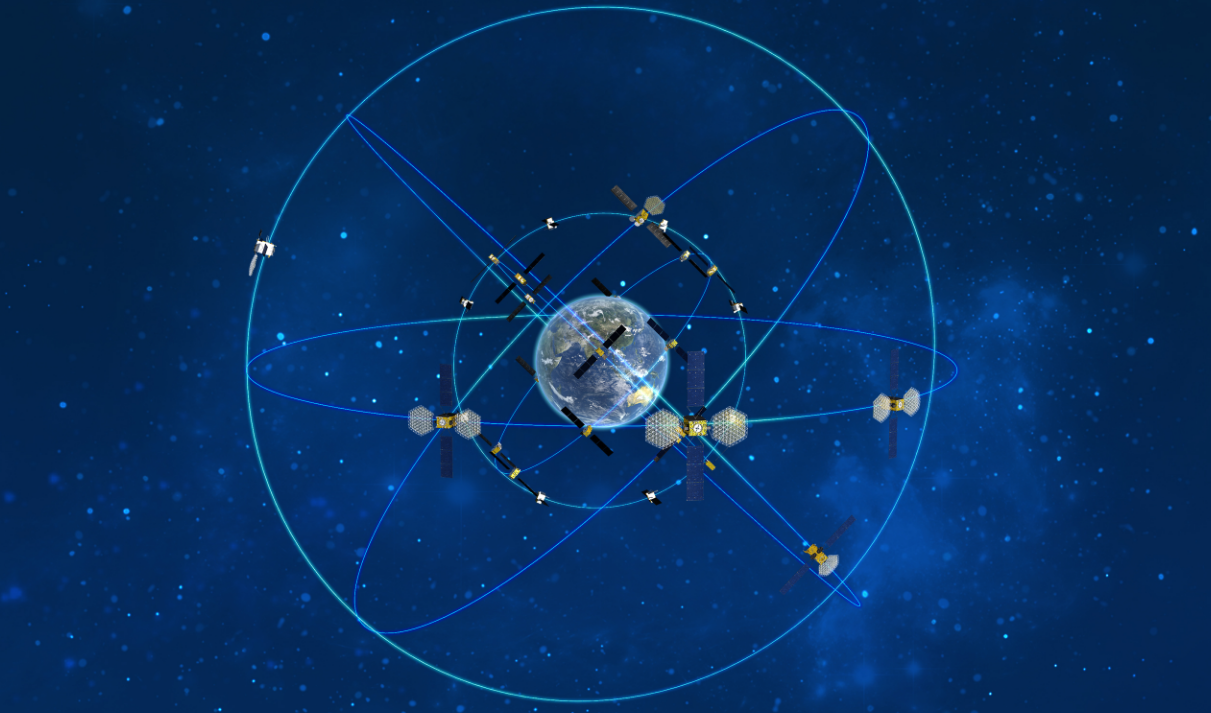
The BeiDou Navigation(导航) Satellite System, or BDS, is a major project independently built and run by China. It was created to meet the needs of national security and support the country’s economic and social growth. As an important system for positioning and timing, BDS offers round-the-clock, all-weather, and highly accurate services to users around the world.
The system was developed in three main steps. By the year 2000, the first stage, called BDS-1, began offering services within China. In 2012, BDS-2 was completed, providing coverage across the Asia-Pacific region. Finally, by 2020, BDS-3 was finished, making the system fully global. This step-by-step approach has made BDS a unique and successful model of satellite navigation development.
Today, BDS is widely used in many areas of daily life and industry. It helps with transportation, farming, weather reporting, disaster response, and public safety. It also supports the work of online businesses, smartphone makers, and location-based services. As a result, BDS has created new business models and improved the way people live and work.
China follows the principle of developing BDS for the world and aims to offer top-class service. The system is shared openly with other countries to support global progress. By cooperating with other satellite navigation systems, BDS helps provide more reliable and better services to international users. It stands as one of China’s key achievements and a valuable gift to the global community.
Looking ahead, China plans to build a more complete, smart, and widely available positioning and timing network by 2035. Through constant improvement and international teamwork, BDS will keep serving the needs of modern life and contribute to a more connected world.
原创编写 版权所有 侵权必究 每日更新 个性化阅读 英语飙升
1.1.What did the completion of BDS-2 in 2012 mark?
A The start of the project.
B Wider service in Asia.
C The achievement of global cover.
D A focus on financial growth only.
解析:选B。1.B细节理解题。第二段以三步走方式说明发展:BDS-1(2000年)服务中国,BDS-2(2012年)覆盖亚太,BDS-3(2020年)实现全球。因此,BDS-2的完成标志着服务范围首次由中国扩展至亚太地区。选项B中的“Wider service in Asia.”准确概括了这一标志性进展。故选B。
2.2.In which field is BDS NOT mentioned to be helpful?
A Traffic control.
B School teaching.
C Agricultural work.
D Weather forecast.
解析:选B。2.B细节理解题。第三段明确列举了交通、农业、气象预报、灾害应对、公共安全等领域,未提及学校教育。A、C、D分别对应原文的transportation, farming, weather reporting。故选B。
3.3.From Paragraph 4, what can we infer about BDS’s role in the world?
A It mainly meets China’s own needs.
B It aims to lead global competition.
C It supports to worldwide progress.
D It works best without teamwork.
解析:选C。3.C推理判断题。第四段指出北斗遵循“为世界发展”的原则,开放共享,与国际系统合作以提供更好服务,并称之为“献给全球社会的宝贵礼物”。由此可合理推断,其全球角色是促进世界发展。A、D与原文“shared openly”、“cooperating”相悖;B中的“lead competition”无依据。故选C。
4.4.What is the main purpose of the passage?
A To introduce a Chinese achievement.
B To predict future technical changes.
C To discuss costs of space projects.
D To compare different navigation systems.
解析:选A。4.A主旨大意题。全文围绕中国北斗系统,介绍了其建设目的、发展步骤、广泛应用、全球价值和未来规划,核心是介绍这一国家重大成就。B项“预测趋势”仅为末段部分内容;C项“讨论成本”和D项“比较系统”均未在文中涉及。故选A。