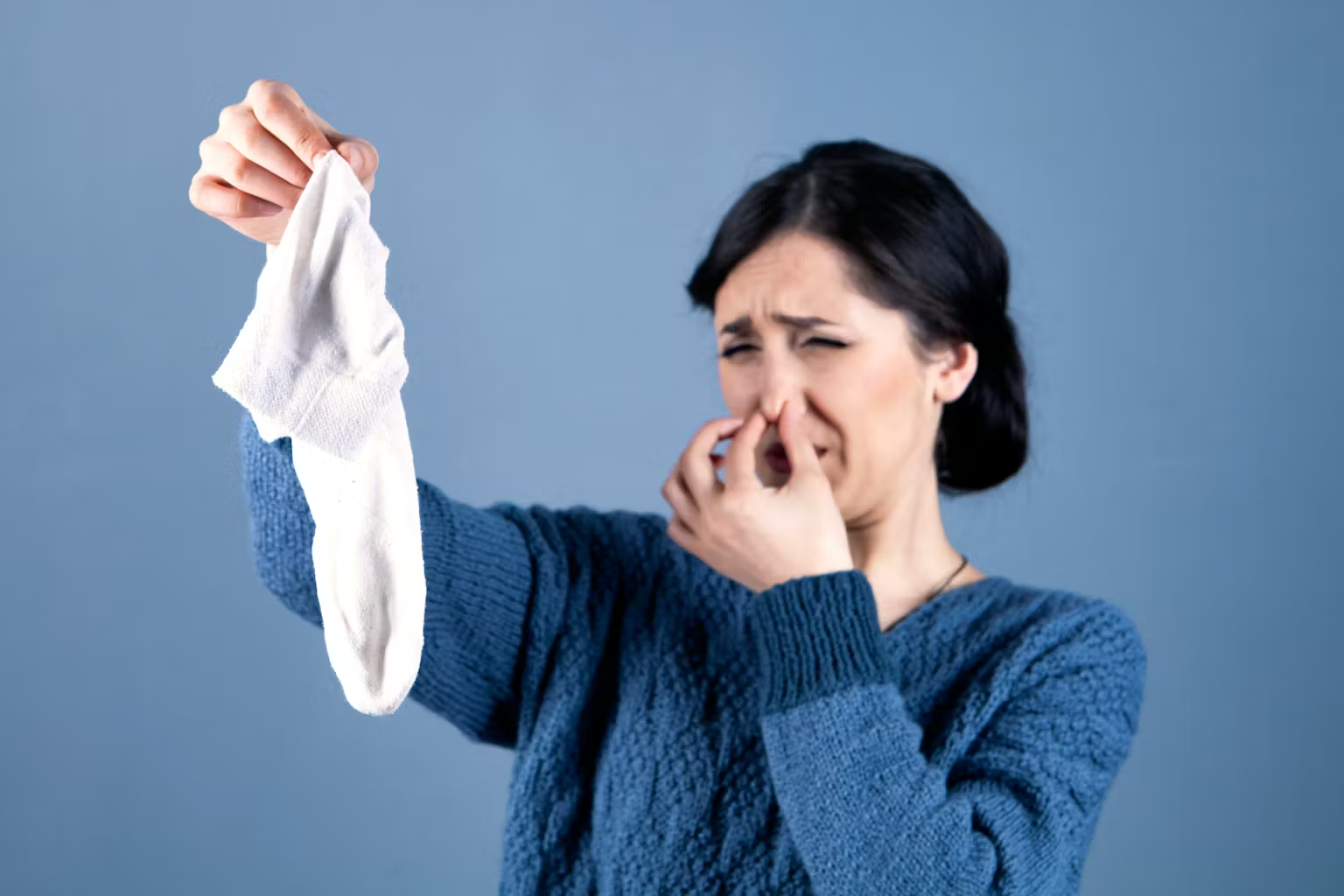
It’s quite common to wear the same pair of jeans, a sweater or even a T-shirt more than once. But what about your socks?
Our feet are home to a tiny world of bacteria and fungi — typically containing up to 1,000 different types of these organisms. The foot also has a more various range of fungi living on it than any other part of the human body, and the foot skin has one of the largest numbers of sweat glands in the human body. Most foot bacteria and fungi prefer to live in the warm, wet areas between your toes where they feed on the nutrients in your sweat and dead skin cells. The waste produced by these micro-organisms is the reason why feet, socks and shoes can start to smell bad.
As socks can hold sweat in, this creates an even more ideal environment for smell-causing bacteria, and these bacteria can survive on fabric for months. The micro-organisms in your socks don’t just come from the bacteria and fungi on your feet, but also from the places around you like home or gym floors. They also carry harmful germs such as some kinds of disease-causing fungi, and can pass these micro-organisms to surfaces, spreading the fungi that cause athlete’s foot.
To reduce smelly feet and bacterial growth, avoid wearing socks or shoes that make your feet sweat a lot. You can buy socks that can kill the bacteria on your feet. Bamboo socks let more air flow through, making sweat dry up quickly. However, for socks made of cotton, wool or man-made fibres, it’s best to only wear them once to prevent smelly feet and avoid foot infections.
Wash your socks correctly between uses: if your feet aren’t unusually smelly, wash the socks in warm water (30–40°C) with a mild cleaning liquid. To clean and disinfect them thoroughly, use a cleaning liquid with enzymes(酶) and wash at 60°C. Drying socks outside is also a good idea, as ultraviolet(紫外线的) rays in sunlight can kill most of the bacteria and fungi on the socks.
原创编写 版权所有 侵权必究 每日更新 个性化阅读 英语飙升
1.1. What is identified as the direct source of the bad smell from feet and socks?
A The sweat itself.
B The dead skin cells.
C The waste of microbes.
D The warm moisture.
解析:选C。1.C细节理解题。第二段末句“The waste produced by these micro-organisms is the reason why feet, socks and shoes can start to smell bad.”明确指出,微生物产生的废物是异味的直接原因。A、D是微生物生存的条件,B是微生物的食物,均非直接来源。故选C。
2.2.What does the word “They” in Paragraph 3 refer to?
A The sock microorganisms.
B The gym floor surfaces.
C The foot bacteria only.
D The sweat drops alone.
解析:选A。2.A词义指代题。“They”指代前一句主语“The micro-organisms in your socks”。A项为其同义表述。B项是微生物的来源地之一,而非其本身。C、D项中的“only/alone”将范围绝对化,与原文中微生物来源广泛(来自脚部和环境)的描述不符。故选A。
3.3.What can be inferred about socks made of cotton from the text?
A Their quick-drying feature.
B The need for daily change.
C Their bacteria-killing effect.
D The cold-water washing advice.
解析:选B。3.B推理判断题。第四段明确指出,棉、羊毛等材质的袜子最好“只穿一次”(only wear them once),据此可合理推断出需要每日更换。A项是竹袜的特点;C项文中未提及棉袜有杀菌功能;D项与末段建议用温水(warm water)清洗不符。故选B。
4.4.What is the main purpose of the last paragraph?
A To compare washing cleaning liquids.
B To provide sock care guidance.
C To explain disinfection principles.
D To highlight outdoor drying.
解析:选B。4.B段落大意题。末段核心是介绍如何正确清洗(水温、清洁剂)和晾晒(户外紫外线)袜子,主旨是提供全面的护理指导。A和D仅是文中提到的具体细节,不能概括全段。C项“解释原理”偏离段落提供操作建议的实践性目的。故选B。