
熊也能“刷脸”?加拿大这项黑科技,专治“认熊难”
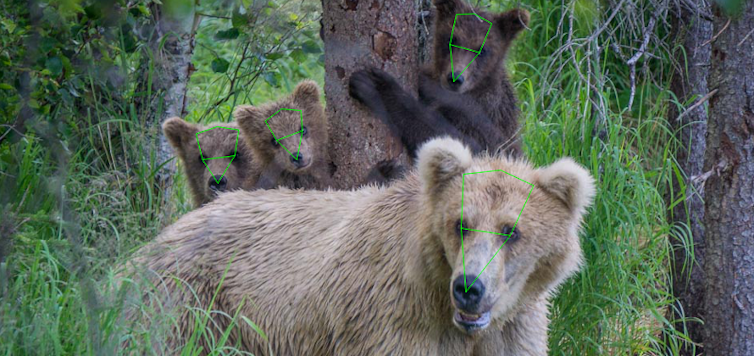
When a bear attacked a group of schoolchildren in Canada in late 2025, authorities faced a critical challenge: finding the specific bear responsible. Identifying individual bears is extremely difficult. To humans, bears often look alike, and while DNA testing is accurate, it is costly and requires capturing animals, which causes them significant stress. This incident underscored the urgent need for a more efficient and less invasive method of bear identification.
Recent technological advances now provide a promising solution: facial recognition for bears. A tool named BearID is currently in development for this very purpose. It employs artificial intelligence to analyze photographs of bear faces. Although a bear’s body size changes dramatically with the seasons, the unique layout of its facial features — the distance between its eyes, the shape of its nose — remains consistent over time. The system measures these stable points to create a unique profile for each animal, enabling reliable identification across different photos and years.
This application of facial recognition is far less controversial for wildlife than it is for humans. While the use of such technology on people raises serious ethical and privacy concerns, its primary goal in conservation is beneficial. It allows ecologists to monitor bear populations more accurately and study their natural behaviors in detail. Furthermore, it provides wildlife managers with a precise tool to identify and, if necessary, relocate only those specific bears that pose genuine problems, thereby protecting both human safety and the broader bear community.
1.1.The underlined word “underscored” in Paragraph 1 is closest in meaning to ________.
A created
B solved
C emphasized
D questioned
解析:选C。C词义猜测题。第一段最后一句指出:“This incident underscored the urgent need for a more efficient and less invasive method of bear identification.”(这一事件______对更高效、更少侵入性的熊识别方法的迫切需求。)根据上下文,熊攻击事件暴露了现有识别方法的不足(如DNA检测成本高、压力大),从而凸显或强调了改进方法的必要性。“underscored”意为“强调、凸显”,与“emphasized”同义。其他选项中,“created”(创造)、“solved”(解决)和“questioned”(质疑)均不符合语境,因为事件本身并未创造、解决或质疑需求,而是使其更加突出。故选C。
2.2.What makes facial recognition reliable in identifying individual bears?
A Seasonal body change.
B Stable facial features.
C Quality camera equipment.
D Advanced AI programs.
解析:选B。B细节理解题。第二段明确说明:“Although a bear’s body size changes dramatically with the seasons, the unique layout of its facial features — the distance between its eyes, the shape of its nose — remains consistent over time.”(尽管熊的身体大小随季节变化巨大,但其面部特征的独特布局——如眼睛间距、鼻子形状——随时间保持稳定。)随后指出系统通过测量这些稳定点来创建独特配置文件,实现可靠识别。因此,可靠性源于面部特征的稳定性。选项A(季节性身体变化)反而增加识别难度;选项C(质量相机设备)和D(先进计算机程序)虽为技术组成部分,但文章强调的核心是面部特征本身稳定性,而非设备或程序。故选B。
3.3.What is the author’s attitude towards facial recognition for wildlife?
A Cautiously supportive.
B Strongly critical.
C Totally unconcerned.
D Deeply contradictory.
解析:选A。A观点态度题。作者在第三段提到,野生动物面部识别“far less controversial for wildlife than it is for humans”(与人类使用相比争议少得多),并指出其保护目标是有益的(beneficial),如帮助生态学家监测种群、精准管理问题熊。第四段进一步肯定该技术能促进公众参与,加深对野生动物的欣赏。作者在支持的同时,也提及人类面部识别存在的伦理和隐私问题,表明其态度是谨慎支持——既看到技术优势,又意识到潜在争议。选项B(强烈批评)、C(完全不关心)和D(deeply contradictory)均不符合文章基调,作者整体持正面态度,但未忽视对比人类应用时的争议。故选A。
4.4.Why is “Fat Bear Week” mentioned in the last paragraph?
A To criticize an online trend.
B To show public curiosity.
C To explain bear’s physiology.
D To stress conservation success.
解析:选B。B推理判断题。最后段首句指出:“Popular activities like the online ‘Fat Bear Week’ competition demonstrate a strong public interest in following the lives of specific animals.”(如“Fat Bear Week”在线竞赛等活动显示了公众对追踪特定动物生活的浓厚兴趣。)随后说明面部识别技术能帮助公众可靠识别个体熊,从而加强这种联系。因此,提到“Fat Bear Week”是为了展示公众对野生动物的好奇心,为技术如何促进公众参与提供例证。选项A(批评在线趋势)错误,因作者正面描述该活动;选项C(解释熊的生理)偏离重点,段落未讨论生理细节;选项D(强调保护成功)不准确,此处主要强调公众兴趣而非直接说明保护成果。故选B。