
校园青春版《牡丹亭》在台首演 再掀昆曲热潮
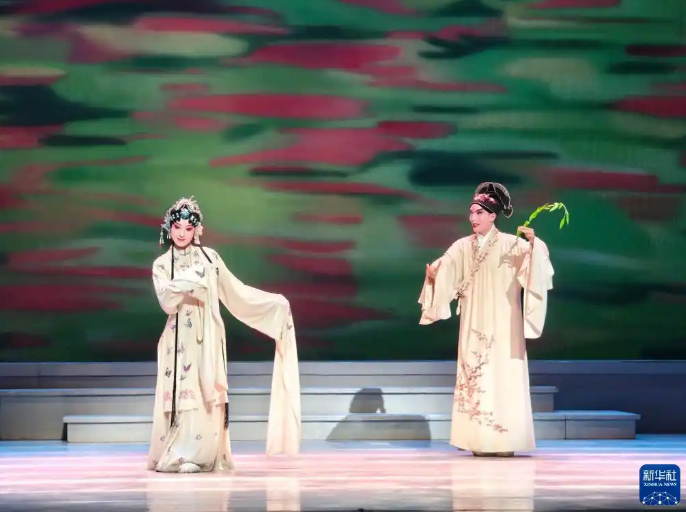
Twenty years after the youth edition of the classic Kunqu opera The Peony Pavilion (牡丹亭) was first staged in Taipei, a special new “campus youth” version (版本) was performed in Taiwan. This show was unique because all the performers were university students from the Chinese mainland.
Created by famous Taiwan novelist Pai Hsien-yung, the original youth version of this 16th-century opera came out in 2004. It has been put on over 500 times, famous for its nice costumes and wonderful stage design. The campus version is a shorter one of the 9-hour original work. It started from a 2024 project to encourage young people to pass on Kunqu, a 600-year-old Chinese opera listed as a UNESCO Intangible Cultural Heritage.
Fifty students from 29 universities were chosen for the show. Though they had little professional Kunqu training, they practiced hard for nearly nine months. They first performed the campus version in Suzhou, Jiangsu Province — the birthplace of Kunqu — in April 2025. All 900 tickets for Thursday’s performance, priced from 300 to 1,500 New Taiwan dollars, were sold out quickly.
1.1.What was special about the campus youth version?
A Its origin place.
B Its performers.
C Its ticket price.
D Its performance time.
解析:选B。B细节理解题。根据文章第一段最后一句 “This show was unique because all the performers were university students from the Chinese mainland.” 可知,这个校园青春版昆曲的特别之处在于表演者的身份,即全部是来自中国大陆的大学生。选项 A(起源地)、C(票价)、D(演出时间)均未被提及是其独特之处,因此选 B。
2.2. When did the original youth edition of The Peony Pavilion come out?
A In 2004.
B In 2024.
C In 2025.
D In 2005.
解析:选A。A细节理解题。根据文章第二段第一句 “Created by famous Taiwan novelist Pai Hsien-yung, the original youth version of this 16th-century opera came out in 2004.” 可知,《牡丹亭》原版青春版的推出时间是 2004 年。选项 B(2024 年)是相关项目的启动时间,C(2025 年)是校园版首次演出时间,D(2005 年)为干扰项,因此选 A。
3.3. What was the main purpose of the 2024 project?
A To shorten the opera.
B To sell tickets in Taiwan.
C To pass on Kunqu culture.
D To train professional actors.
解析:选C。C 细节理解题。根据文章第二段最后一句 “It started from a 2024 project to encourage young people to pass on Kunqu, a 600-year-old Chinese opera listed as a UNESCO Intangible Cultural Heritage.” 可知,2024 年这个项目的目的是鼓励年轻人传承昆曲文化。选项 A(缩短歌剧时长)是校园版的特点,并非项目目的;选项 B(在台湾售票)是演出的后续行为,不是项目初衷;选项 D(培养专业演员)与原文 “they had little professional Kunqu training” 不符,因此选 C。
4.4. Where was the campus version first performed?
A In Taipei.
B In Beijing.
C In Suzhou.
D In Shanghai.
解析:选C。C细节理解题。根据文章第三段 “They first performed the campus version in Suzhou, Jiangsu Province — the birthplace of Kunqu — in April 2025.” 可知,校园版昆曲的首次演出地点是江苏苏州。选项 A(台北)是原版青春版首次上演的地点,选项 B(北京)、D(上海)未在原文提及,因此选 C。
5.5. What did Professor Zhao hope Taiwanese youth would do?
A Become Kunqu actors.
B Take culture courses.
C Create new operas.
D Learn from their peers.
解析:选D。D 推理判断题。根据文章最后一段赵教授的话 “We hope young people in Taiwan can enjoy and learn about Kunqu by watching their peers (同辈) perform on stage” 可知,他希望台湾的年轻人通过观看同辈的舞台表演来欣赏和了解昆曲,核心是向同辈学习。选项 A(成为昆曲演员)、B(参加文化课程)、C(创作新歌剧)均未被赵教授提及,因此选 D。