
千年古榄:时光镌刻的自然传奇
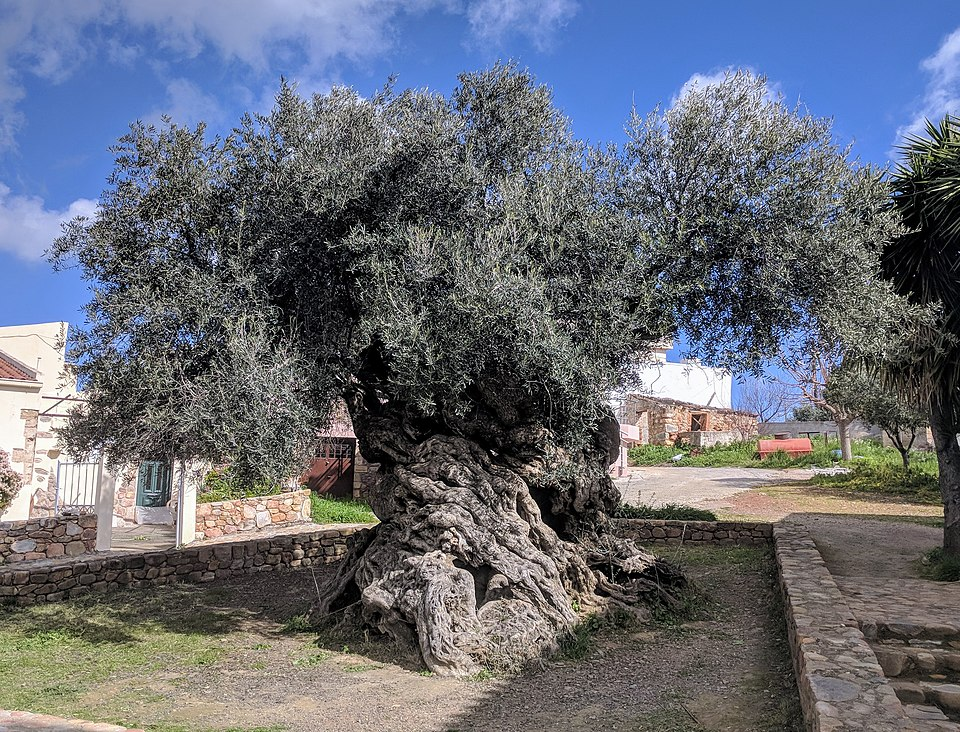
The ancient olive tree of Vouves, located on the island of Crete in Greece, is a remarkable natural wonder. It belongs to a local variety called tsounati and was grafted onto a wild olive tree trunk about three meters above the ground. What makes it truly stunning is its enormous trunk, measuring 12.5 meters around and 4.6 meters across. Rather than looking like a normal tree trunk, it appears as a complex, twisting sculpture — one that continues to change shape even today.
Determining the exact age of the Vouves olive tree is not possible. Over the centuries, the heartwood at its center has slowly decayed away. Yet this is part of the tree’s natural cycle of renewal. As the inside rots (腐烂), new wood grows outward, causing the trunk’s form and size to keep evolving (进化) over thousands of years. Scientists have used tree ring analysis to confirm it is at least 2,000 years old, while researchers from the University of Crete believe it could be as old as 4,000 years. Although no method can verify its precise age, it is widely considered the oldest olive tree in the world.
This ancient tree has lived through much of recorded history. It existed long before famous Greek landmarks like the Parthenon, and even before the time of well-known historical figures such as Alexander the Great. Its pale, weathered trunk tells a story of survival — enduring droughts, fires, and human activity while still producing olives. Today, the tree is recognized as a protected natural monument and draws about 20,000 visitors each year to western Crete.
1.1.What is a special feature of the Vouves olive tree’s trunk?
A It grows like a normal tree.
B It is smaller than usual trunks.
C It looks like a twisting sculpture.
D It has stopped changing shape.
解析:选C。C 细节理解题。文章第一段最后一句明确描述:“Rather than looking like a normal tree trunk, it appears as a complex, twisting sculpture...” 这与C选项“它看起来像一个扭曲的雕塑”完全一致。A选项“它像普通树一样生长”与原文描述相反;B选项“它比一般树干小”与文中“enormous trunk”(巨大树干)矛盾;D选项“它已停止变形”与第一段“continues to change shape”相悖。故选C。
2.2. Why is the exact age of the Vouves olive tree hard to confirm?
A It was grafted recently.
B Scientists lack interest in it.
C Tree ring analysis is forbidden.
D Its heartwood has decayed.
解析:选D。D 细节理解题。第二段第二、三句指出:“Over the centuries, the heartwood at its center has slowly decayed away... As the inside rots, new wood grows outward...” 说明树心腐烂导致年轮不全,难以精确测年。A选项“它最近被嫁接”与文中“about three meters above the ground”的嫁接描述无关年龄测定;B选项“科学家不感兴趣”与文中科学家积极研究的事实不符;C选项“年轮分析被禁止”在文中未提及。故选D。
3.3. Why does the author mention the Parthenon?
A To introduce Greek architecture.
B To stress the tree’s long history.
C To show the tree’s famous location.
D To attract more visitors to Crete.
解析:选B。B 推理判断题。第三段提到:“It existed long before famous Greek landmarks like the Parthenon...” 作者通过对比帕特农神庙(建于公元前5世纪)的建造时间,突出该树历史更加悠久。A选项“介绍希腊建筑”偏离重点,文章主题是树而非建筑;C选项“显示树的位置著名”不准确,帕特农神庙在雅典,而树在克里特岛;D选项“吸引游客”虽与后文游客量相关,但提及帕特农神庙的主要目的并非宣传旅游。故选B。
4.4. What is the main message conveyed through the tree?
A Nature shows lasting beauty and strength.
B Old things should make way for new ones.
C Ancient trees are natural monuments.
D Scientific research can solve natural mysteries.
解析:选A。A 推理判断题。文章最后一段总结道:“It reminds us of the enduring beauty and strength of nature.” 这直接对应A选项“自然展现出持久的美与力量”。B选项“旧事物应让位于新事物”与文章歌颂古树生命力的主旨相反;C选项“古树是自然纪念碑”虽是事实,但仅是细节,并非文章核心思想;D选项“科学研究能解开自然之谜”与第二段“no method can verify its precise age”矛盾。故选A。