
印度街头流浪狗何去何从?
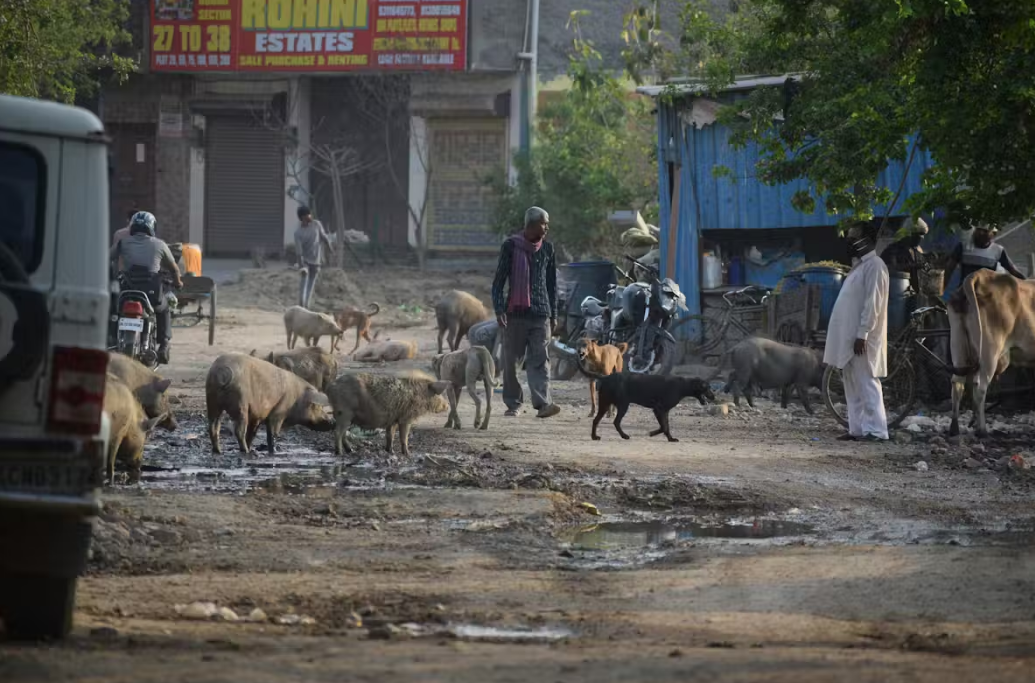
Growing up in rural India, my grandmother would feed the village dog half a chapati and a bowl of milk each afternoon. Years later, when I lived in Delhi, I saw street dogs that even refused biscuits. They were given too much food by local households that all wanted to take care of them.
India has a special mix of religious and cultural values. These values make both rich and poor people very tolerant of non-humans and wildlife. But as cities grow, things are changing. Street dogs in these crowded and dirty shared spaces are becoming more protective of their areas. A more recent survey found there are about 1 million such dogs in Delhi alone. Sadly, India also has more than a third of the world’s rabies (狂犬病) deaths.
India’s culture and laws do not allow killing dogs. Dogs should be caught, sterilized (绝育), vaccinated and importantly, sent back to their original areas. But in real life, these rules are often ignored. In August 2025, after some children were attacked by street dogs, India’s Supreme Court once ordered all street dogs in Delhi and its surrounding areas to be rounded up. They were to be put in shelters or pounds. However, this order was not practical — there were simply not enough shelters for millions of dogs. It also caused strong opposition from animal rights groups. Within two days, the court changed its decision and went back to the long-used sterilization policy.
As India becomes more urbanized, it has to make a choice. It can either keep spaces for the old relationship between humans and dogs that started before cities existed, or follow some countries’ way of fully controlling street dogs. My grandmother’s habit of giving half a chapati to the dog showed an old agreement: people gave a little, lived peacefully together and both got benefits. But Delhi’s overfed street dogs that protect their areas show a new and closer connection. It remains unclear whether this new way is good for either humans or dogs.
1.1.Why did street dogs in Delhi refuse biscuits?
A They disliked the taste.
B They were overfed.
C They preferred milk.
D They feared humans.
解析:选B。B细节理解题。细节理解题的答案可直接在原文中找到对应依据。根据文章第一段最后两句 “I saw street dogs that even refused biscuits. They were given too much food by local households that all wanted to take care of them” 可知,德里的流浪狗拒绝饼干的原因是当地住户都想照顾它们,给了它们过多的食物,也就是狗狗被喂得太饱了。A 选项 “它们不喜欢饼干的味道”、C 选项 “它们更喜欢牛奶”、D 选项 “它们害怕人类” 在原文中均无对应信息,故排除。故选B。
2.2. What can we infer from Paragraph 2?
A City growth affects human-dog relations.
B Rabies is not a problem in rural India.
C Culture stops dogs from protecting areas.
D Delhi has the most street dogs in the world.
解析:选A。A推理判断题。文章第二段先指出印度的文化价值观让人们包容野生动物,随后用转折词But引出关键信息:“as cities grow, things are changing. Street dogs in these crowded and dirty shared spaces are becoming more protective of their areas”,即随着城市发展,情况发生了改变,流浪狗对自己的领地变得更具保护欲。由此可以推断,城市发展影响了人与狗之间的关系。B 选项 “印度农村不存在狂犬病问题”,原文仅提及印度狂犬病死亡人数占全球三分之一以上,未对农村和城市的狂犬病情况做对比,属于无中生有;C 选项 “文化阻止了狗狗守护领地”,与原文 “文化让人们包容动物,但城市发展使狗狗更护领地” 的表述相悖;D 选项 “德里的流浪狗数量全球最多”,原文只提到德里有大约 100 万只流浪狗,并未提及这一数量在全球的排名,故排除。故选A。
3.3.Why does the author mention the Supreme Court’s 2025 order and its quick withdrawal?
A To criticize its rushed decision.
B To illustrate its impracticality.
C To explain the rabies statistics.
D To support animal rights groups.
解析:选B。B推理判断题。根据文章第三段内容,最高法院 2025 年 8 月下令围捕德里及周边的流浪狗并送至收容所,但随即指出 “this order was not practical — there were simply not enough shelters for millions of dogs”,即该命令不切实际,原因是没有足够的收容所容纳数百万只狗狗,随后该命令在两天内被撤销,政策回到长期使用的绝育方案。由此可知,作者提及这一事件是为了说明该命令的不切实际性。故选B。
4.4.What is the main idea of the passage?
A Changing human‑dog relationship.
B Challenges in rabies control.
C Animal rights movements in India.
D Problems caused by urbanization.
解析:选A。A主旨大意题。文章以作者祖母在乡村喂狗的习惯与德里街头狗现状的对比开篇,引出印度人与狗的关系正在发生变化(第一、二段)。接着通过法律政策的执行困境(第三段)进一步说明这一关系的复杂性,最后一段明确点出印度必须在新旧两种相处模式之间做出选择,并指出新关系的影响尚不明确。全文围绕“人与狗关系的变迁”这一主线展开,狂犬病控制(第二段末句)、动物权利活动(第三段中部)与城市化问题(第二、四段提及)均为支撑主旨的细节信息,并非文章讨论的核心。故选A。