
乌克兰“长城”公寓:它的下一个十年在哪里?
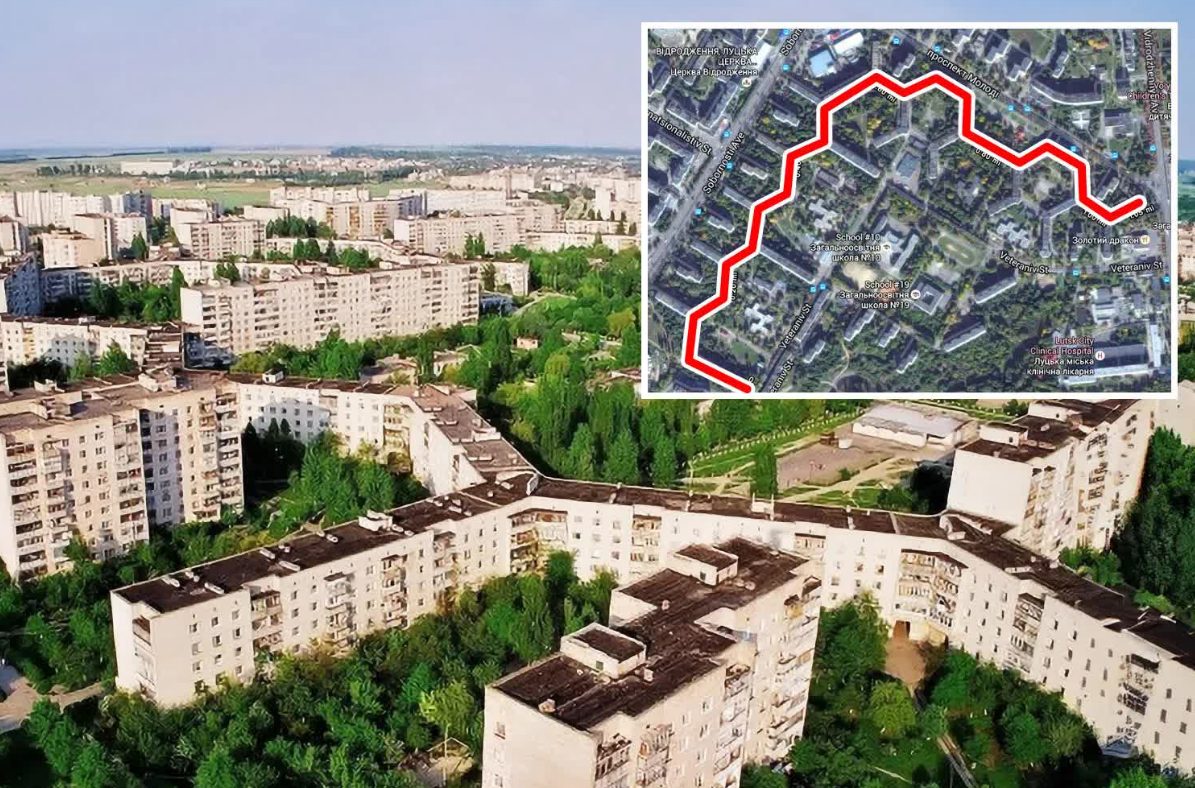
Commonly known as “The Great Wall of China”, the world’s longest residential building is located at the crossing of Sobornosti Avenue and Molodezhy Street. Construction began in 1969 and was completed 11 years later. That’s an unusually long time for an apartment building, but this is an unusual project. The creation of two architects, R. G. Metelnitsky and V. K. Malovitsa, was the longest residential building in the Soviet Union upon completion, and has remained unrivaled in the world for over 40 years.
From ground level, it’s impossible to truly gauge the size of this enormous residential structure, but from above, its impressive honeycomb design is revealed. Although the main line of the building measures “only” 1.75 kilometers, when taking into account all its adjacent (毗连的) extensions, another kilometer is added to the total length. It is said that walking from one end of the building to the other at a normal pace takes the average person about an hour.
Featuring hundreds of entrances, over 3,000 apartments, tens of thousands of windows, and roughly 10,000 residents, the world’s longest residential building is larger than many small towns around the world. Initial residents recall struggling to find their apartments for weeks after moving in, which required the carrying out of a unique address system for each section.
Considered a fascinating modern-day wonder even among architects, “The Great Wall of China” may not remain in its current shape for much longer. Although located in the western part of Ukraine, away from the front lines of the war with Russia, the threat of bombings is constant all over the country. According to local news media, the building is in dire need of repair, but securing the funds is difficult in times of war.
A local travel agency has come up with a plan to secure funding for the repair of the world’s longest residential building by organizing tours and holding events on the roof of this unique concrete giant.
原创编写 版权所有 侵权必究 每日更新 个性化阅读 英语飙升1.1.What fact about the building is NOT provided in the first paragraph?
A Its completion time.
B Its exact location.
C Its architects’ names.
D Its construction cost.
解析:选D。D细节理解题。第一段明确提供了位置(“at the crossing of Sobornosti Avenue and Molodezhy Street”)、建筑师(“Designed by two architects, R. G. Metelnitsky and V. K. Malovitsa”)和完成时间(“completed 11 years later” after 1969)。全文均未提及建造成本。故选D。
2.2.The underlined word “gauge” in Paragraph 2 is closest in meaning to ________.
A describe
B measure
C appreciate
D maintain
解析:选B。B词义猜测题。“From ground level, it’s impossible to truly gauge the size of this enormous residential structure...”这里的“gauge”与“size”(尺寸)搭配,且后文紧接着用具体数据(1.75公里、步行一小时)来量化描述其规模。因此,“gauge”在此处的核心意思是“测量、估量”(measure)。选项A(描述)、C(欣赏)和D(维持)均无法准确体现通过观察或判断以确定具体大小或程度的含义。故选B。
3.3.Why was a unique address system necessary for the building?
A To ensure residents’ safety.
B To prevent people getting lost.
C To promote its fame.
D To reduce maintenance fees.
解析:选B。B推理判断题。第三段指出,“Initial residents recall struggling to find their apartments for weeks after moving in”,这直接导致了独特地址系统的实施。因此,该系统主要是为了解决因建筑规模庞大、结构复杂导致的居民容易迷路的问题,而非直接为了安全(A)、推广(C)或节省费用(D)。故选B。
4.4.What makes the building’s repair urgently needed but difficult according to the last paragraph?
A War causing funding problems.
B Lack of repair materials.
C Damage from natural causes.
D Opposition from the residents.
解析:选A。A细节理解题。最后一段明确说明“the building is in dire need of repair, but securing funds is difficult in times of war”。因此,战争导致的资金困难是维修紧迫但又难以进行的主要原因。文中未提及材料短缺(B)、自然灾害损坏(C)或居民反对(D)。故选A。