
小寒至,严冬始
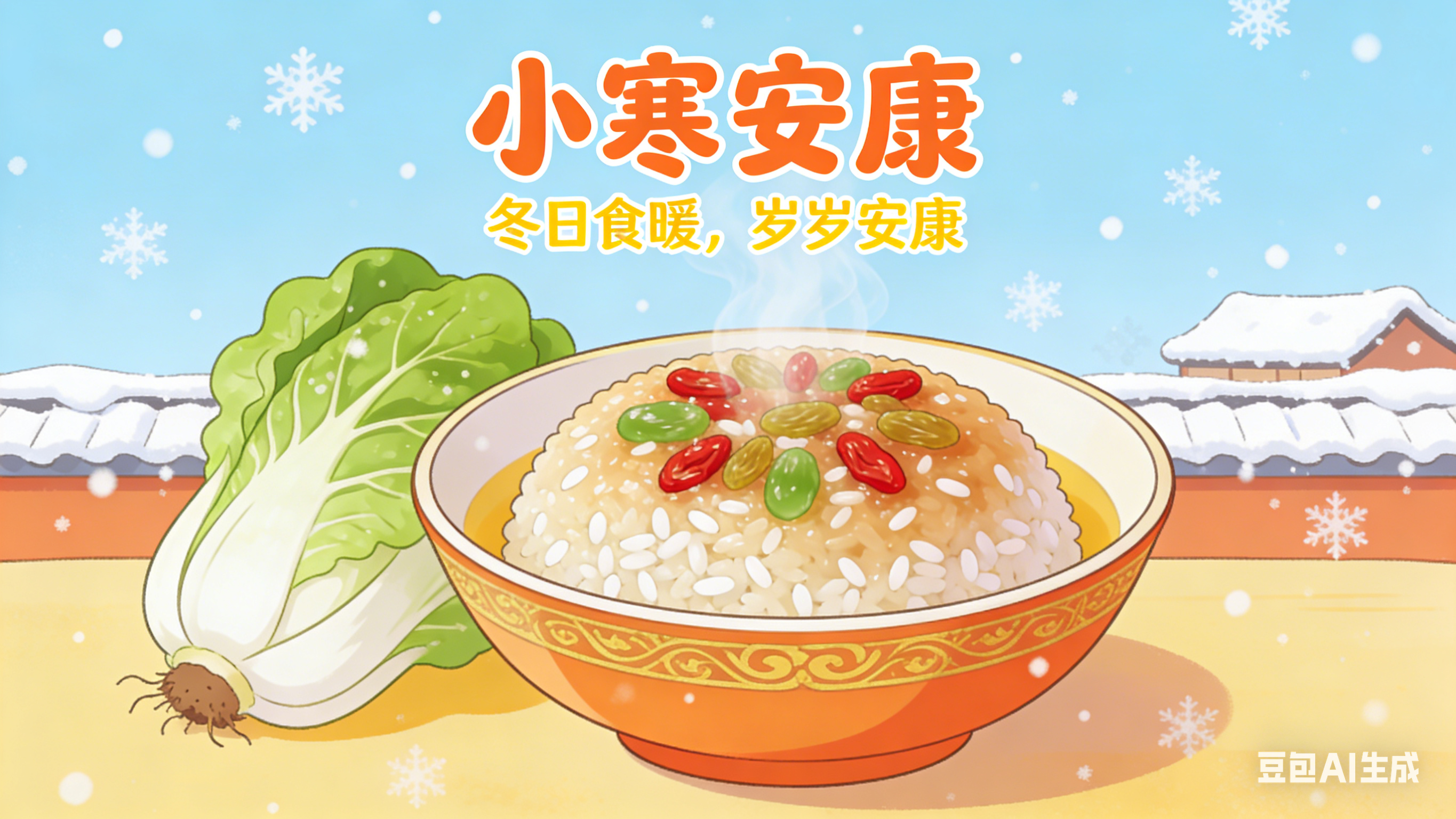
Minor Cold, known as “Xiaohan” in Chinese, is the 23rd of the 24 solar terms in the Chinese lunar calendar. For most parts of China, it marks the start of the coldest period of the year. Its first day typically falls between January 5 and 6. Like other solar terms, Minor Cold has its own unique customs, which reflect Chinese culture and people’s adaptation to the cold weather.
A popular traditional food during Minor Cold is eight treasures rice pudding, or “babaofan” in Mandarin. This sweet rice dish gets its name from the eight key ingredients it contains. The number eight is lucky for Chinese people because it sounds similar to “fa”, a character meaning “to become rich”. Thus, this dessert is seen as a symbol of wealth and good health. Chefs also suggest that nutritious ingredients like dates, hawthorns and goji berries in it help people keep up their energy in the cold.
Besides eight treasures rice pudding, different regions have their own dietary traditions for Minor Cold. In Nanjing and Shanghai, people often cook vegetable rice, sometimes with meat added. In Guangzhou, eating sticky rice (mixed with regular rice for better taste) on the morning of Minor Cold is a long-standing tradition. In most northern areas, people eat Chinese cabbage, which is a staple as it is easy to preserve in winter and tastes better after storage, solving the problem of scarce winter vegetables.
1.1.What can we learn about Minor Cold from the first paragraph?
A It ends the coldest period.
B Its date is fixed on Jan 5.
C It has distinct customs.
D It’s the 24th solar term.
解析:选C。C 细节理解题。根据第一段最后一句的“Like other solar terms, Minor Cold has its own unique customs”可知,小寒和其他节气一样有自己独特的习俗,即它有鲜明的习俗。故选C。
2.2. Why is eight treasures rice pudding considered lucky?
A It has rich nutrients.
B It links to prosperity.
C It tastes sweet and delicious.
D It uses eight ingredients.
解析:选B。B 推理判断题。根据第二段第三句“The number eight is lucky for Chinese people because it sounds similar to ‘fa’, a character meaning ‘to become rich’”可知,八宝饭含“八”这个幸运数字,而“八”谐音“发”(发财),由此可推断它被认为幸运是因为与富足相关。故选B。
3.3. The underlined word “scarce” in Paragraph 3 is closest in meaning to __________.
A fresh
B preserved
C nutritious
D insufficient
解析:选D。D 词义猜测题。根据第三段划线词所在句“...solving the problem of scarce winter vegetables.”,并结合前文“Chinese cabbage, which is a staple... easy to preserve in winter...”可知,大白菜易于储存,从而解决了冬季某种蔬菜的问题。根据逻辑,冬季新鲜蔬菜通常难以获得,储存白菜正是为了应对蔬菜“不足”或“短缺”的问题。因此,“scarce”意为“不足的、缺乏的”,与D项“insufficient”同义。故选D。
4.4. What can be inferred about activities after Minor Cold?
A It initiates a transition towards festive preparations.
B Agricultural work becomes the most urgent task.
C Social activities stop due to severe weather.
D People mainly focus on observing animal behaviors.
解析:选A。A 推理判断题。根据最后一段开头内容“After Minor Cold, Chinese people start preparing for the Spring Festival...”可知,小寒过后,人们开始写春联、买年画等,这些活动都是为了迎接春节做准备,这意味着此时开始向节庆准备过渡。故选A。