
钱塘江畔将添艺术新地标,世界级设计抢先看!
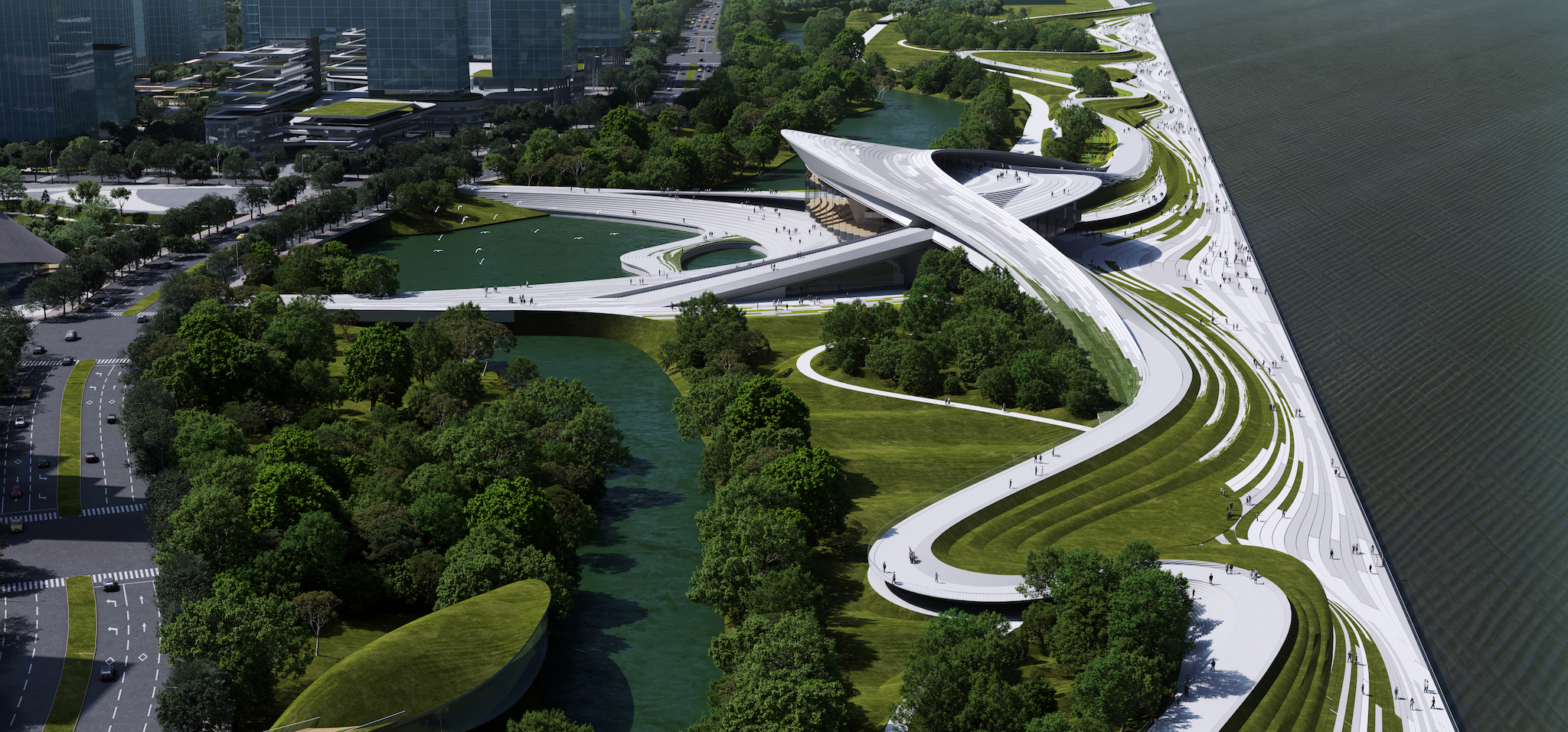
A series of ambitious downtown developments are nestled beside the Qiantang River in Hangzhou. These new buildings wind along the river, offering wonderful views of the nearby waterways. In the coming years, another building will be added to this growing skyline (the top outline of a city’s buildings): the Hangzhou Qiantang Bay Art Museum. Leading the museum’s design is Snøhetta, a world-famous architecture firm from Oslo, Norway. It has designed many famous projects, such as the Oslo Opera House (one of Europe’s most famous opera houses), Egypt’s Bibliotheca Alexandrina (a historic famous library in Egypt), and the 2017 transformation of Times Square.
According to the design drawings recently released by Snøhetta, the Qiantang Bay Art Museum will be greatly influenced by its natural environment. The museum’s architecture draws most of its inspiration from the Qiantang River, reinterpreting the river’s winding course through a regular outline, smooth curves and natural shapes. At the center of the design are two wave-like structures, twisted into walkways that meet at a central point. Directly above this point is a green rooftop platform, where visitors can enjoy the view of the river in front of them.
Covering an area of 18,000 square meters (about 194,000 square feet), the museum is divided into two well-organized parts. They are connected by smooth walkways that run through the surrounding area. To the north, pleasant paths curve along the river view and finally lead to the rooftop. To the east, bridge-like paths easily guide visitors from the city area to the cultural part. In addition, a central entrance on the museum’s ground floor further emphasizes this idea of entry. In other words, this gate is both a physical and symbolic entrance. Walking under it makes people feel like entering a world of nature, creativity and beauty.
As a whole, Snøhetta’s design for the Qiantang Bay Art Museum shows an artistic vision. It exists in harmony with the Qiantang River rather than competing with it. This idea continues inside the museum, which has large public spaces for social activities, education and group gatherings. “Our design catches the core of the site’s special location. We use architecture and landscape as a bridge to connect nature and the city smoothly,” Snøhetta explains. “With this museum, we hope to inspire people’s interest in art and creativity, honoring Hangzhou’s famous Qiantang River.”
1.1.What is Snøhetta?
A A museum.
B An opera house.
C An architecture firm.
D A city square.
解析:选C。C细节理解题。依据文章第一段第四句:“Leading the museum’s design is Snøhetta, a world-famous architecture firm from Oslo, Norway.”(领导该博物馆设计的是Snøhetta,一家来自挪威奥斯陆的世界著名建筑公司。)该句直接明确地说明了Snøhetta是一家建筑公司,因此正确答案为C。其他选项(A博物馆、B歌剧院、D城市广场)均为Snøhetta设计的项目,而非其本身。故选C。
2.2.What is the second paragraph mainly about?
A The rooftop platform’s purpose.
B River-inspired design features.
C The construction timeline.
D Internal walkways’ layout.
解析:选B。B段落大意题。第二段首句指出:“the Qiantang Bay Art Museum will be greatly influenced by its natural environment.”(钱塘湾艺术博物馆将深受其自然环境的影响。)随后全段围绕设计如何从钱塘江汲取灵感展开,具体描述了“winding course”(蜿蜒过程)、“wave-like structures”(波浪状结构)、“walkways”(走道)和“green rooftop platform”(绿色屋顶平台)等特征。选项B“River-inspired design features”(河流启发的设计特征)准确概括了该段核心内容。选项A(屋顶平台的目的)、C(建设时间线)和D(内部走道布局)均仅为局部细节或未提及。故选B。
3.3.What can be inferred about the walkways and gateway?
A They complicate construction.
B They separate the two sections.
C They symbolize entry into culture.
D They are for vehicles mainly.
解析:选C。C推理判断题。文章第三段详细描述了走道和入口的功能与象征意义。其中提到:“a central entrance on the museum’s ground floor further emphasizes this idea of entry. In other words, this gate is both a physical and symbolic entrance.”(博物馆地面的中央入口进一步强调了“进入”这一理念,换言之,这个门既是物理入口也是象征性入口。)结合前文“bridge-like paths easily guide visitors from the city area to the cultural part”(桥式走道轻松引导游客从城市区域前往文化区域),可推断走道和入口象征着从城市生活“进入”文化、自然与艺术世界。选项C与此推断一致。选项A(使建设复杂化)、B(分隔两个部分)和D(主要供车辆使用)均与文章内容不符或未提及。故选C。
4.4.What is the main design concept of the museum?
A To compete with the river view.
B To connect nature and the city.
C To show modern materials.
D To become the city’s tallest building.
解析:选B。B细节理解题。文章最后一段明确阐述了设计理念:“It exists in harmony with the Qiantang River rather than competing with it.”(它与钱塘江和谐共存,而非竞争。)并引用Snøhetta的解释:“We use architecture and landscape as a bridge to connect nature and the city smoothly.”(我们用建筑和景观作为桥梁,流畅地连接自然与城市。)这直接表明主要设计理念是连接自然与城市,因此正确答案为B。选项A(与江景竞争)与文章相反;选项C(展示现代材料)和D(成为城市最高建筑)均未在文中提及。故选B。