
中国L3级自动驾驶,正式开测!
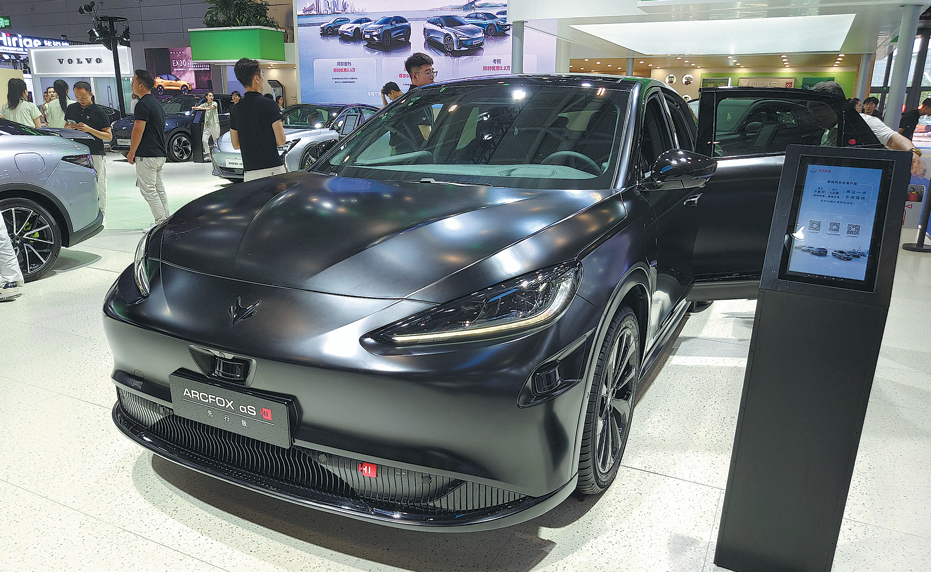
China has officially started testing Level 3 (L3) self-driving cars on public roads. In early December, models like the Deepal SL03 and Arcfox Alpha S received national approval for a conditional commercial pilot program. These vehicles, registered with standard license plates, are now allowed to operate under defined conditions on specific highway sections in Chongqing and Beijing.
Level 3 autonomous driving, classified as “conditional automation”, means the vehicle can handle all driving tasks in certain situations, like on highways. However, the human driver must still be ready to take control when the system requests it. This marks a key advance from Level 2 (L2) systems. In an L2 car, the driver must constantly supervise and is always legally responsible for the vehicle, even when using driving-assist features.
Several major Chinese automakers, including BYD, Nio, FAW, and SAIC, are in the process of getting L3 approvals. Huawei’s Advanced Driving System (ADS) for highway L3 is undergoing extensive testing in several Chinese cities. The brand Avatr is set to become the first to use this system in mass-produced cars, with new models planned for launch in the second half of 2026. Market research also indicates significant demand, with many consumers willing to pay more for advanced self-driving features.
Despite progress, significant challenges remain before L3 cars can become widespread. A major unresolved issue is legal liability: determining who is responsible — the driver or the manufacturer — when the car is in autonomous driving mode. Car companies are also exploring different technical paths, balancing cost, safety, and performance, which will influence future standards. Furthermore, nationwide use depends on better infrastructure, like high-precision maps.
1.1.What is the key feature of Level 3 self-driving cars compared to Level 2?
A Dependence on different companies.
B Driver taking control when required.
C Operation without driver attention.
D No legal responsibility.
解析:选B。B 细节理解题。第二段明确指出,Level 3(L3)的关键特征是“conditional automation”(有条件自动化),即车辆可在特定情况下处理所有驾驶任务,但“the human driver must still be ready to take control when the system requests it”(人类驾驶员仍必须在系统请求时准备好接管控制)。这正是选项B “Driver taking control when required”(驾驶员在需要时接管控制)所表达的意思。选项A(依赖不同公司)未在对比中被提及;选项C(无需驾驶员关注)与L3要求驾驶员随时准备接管的事实相反;选项D(没有法律责任)与L2的说明(驾驶员始终负有法律责任)及后文L3的法律责任挑战相矛盾。故选B。
2.2.What is the main idea of the third paragraph?
A Huawei’s new system.
B Plans of car makers.
C Progress and market demand.
D Consumer price preferences.
解析:选C。C段落大意题。第三段围绕两大核心展开:① 行业进展(Progress)—— 比亚迪、蔚来、一汽、上汽等主流车企正在推进 L3 级自动驾驶认证,华为 ADS 高速公路自动驾驶系统开展大规模测试,阿维塔计划 2026 年下半年推出搭载该系统的量产车;② 市场需求(Market demand)—— 市场调研显示,消费者对高级自动驾驶功能需求旺盛,许多人愿意为此支付溢价。选项 C 完整覆盖全段核心,是最全面的概括。选项 A、B 仅为 “进展” 中的局部细节,选项 D 是 “市场需求” 的具体表现,均无法代表全段主旨。故选C。
3.3.What is the main challenge of L3 self-driving mentioned in the text?
A High insurance costs.
B Lack of driver attention.
C Uncertain responsibility in accidents.
D Limited highway sections.
解析:选C。C推理判断题。答案定位在文章第四段。该段开头明确指出L3汽车普及面临重大挑战,紧接着列举的第一个也是主要的未解决问题就是“legal liability: determining who is responsible — the driver or the manufacturer — when the car is in autonomous driving mode”(法律责任:当汽车处于自主驾驶状态时,确定是驾驶员还是制造商负责)。选项C “Uncertain responsibility in accidents”(事故中责任不明确)是此意的同义转述。选项A(高保险成本)和B(缺乏驾驶员注意力)在文中均未提及;选项D(有限的公路路段)是当前试点项目的条件限制,并非文中强调的主要挑战(major unresolved issue)。故选C。
4.4.What is the experts’ attitude towards the pilot programs?
A They urge faster carrying out.
B They stress thorough testing.
C They prefer immediate sales first.
D They suggest ignoring necessary rules.
解析:选B。B 观点态度题。第五段末尾指出,行业专家强调试点项目的目的“not for rapid deployment, but to carefully test and mature the technology, regulations, and supporting systems”(并非为了快速部署,而是为了谨慎测试技术、法规和支持系统,使其成熟),表明专家主张通过全面测试实现稳定发展。选项B“Stressing thorough testing”(强调全面测试)准确抓住了专家观点。A项“Urging faster carrying out”(敦促更快执行)和C项“They prefer immediate sales first.”(把立即销售放在首位)均与专家“并非为了快速部署”的态度直接相反;D项“They suggest ignoring necessary rules.”(题目建议忽视必要规则)在原文中未提及,且与专家强调测试“法规”的立场不符。故选B。