
小伙墙绘天安门,圆全村老人北京梦
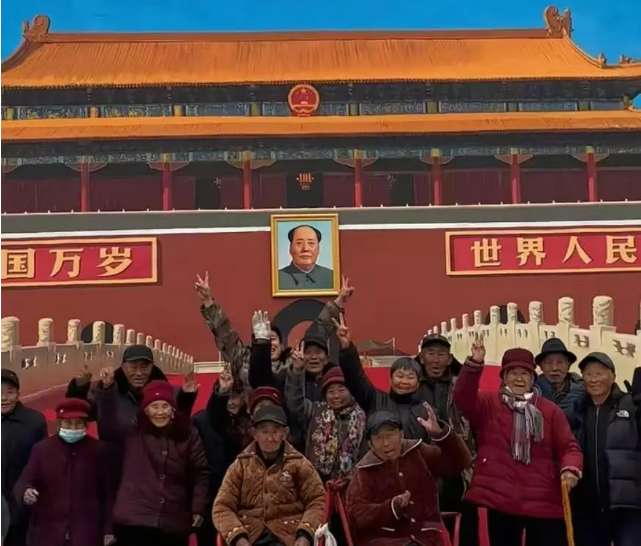
A huge Tian’anmen wall painting has recently become popular in Wuying Village, Yanji Town, Henan Province. The artist, Wu Chengyan, painted this large wall painting to help elderly villagers realize their dream of “seeing Tian’anmen”. Many old people gathered in front of the painting, and the touching story won widespread praise online.
Wu, 39, has loved painting since childhood. Last year, he started painting wall paintings in rural areas. This time, he was inspired by an elderly villager who said visiting Tian’anmen in Beijing was his lifelong wish. Knowing that many older villagers had never traveled far, Wu decided to bring Tian’anmen to them. The painting is 18 meters long and 8 meters high. He started preparing on December 18th and finished on the 22nd, working about eight hours each day.
While painting, Wu was often asked by eager elders when it would be finished. After finishing it, he invited over a dozen elderly villagers to take pictures together. Some who had difficulty walking were brought in wheelchairs. Many people were moved to tears, saying, “This looks just like Beijing!” and “My wish for this year has come true.”
So far, Wu has created 40 to 50 wall paintings in his village, often featuring subjects that elderly people enjoy, such as famous landmarks and people. “I want to help them see more of the world’s beauty,” Wu said. Through his brushes, he is bringing dreams and joy to the seniors in his hometown.
原创编写 版权所有 侵权必究 每日更新 个性化阅读 英语飙升1.1. Why did Wu Chengyan paint the Tian’anmen wall painting?
A To become famous online.
B To fulfill a wish for the elderly.
C To show his painting talent.
D To develop local tourism.
解析:选B。B 细节理解题。第一段明确提到“painted this large wall painting to help elderly villagers realize their dream of ‘seeing Tian’anmen’”,第二段进一步说明灵感来源于一位老年村民的终身愿望。因此,吴承言绘画的目的是为了实现老年人的愿望,而非成名、展示才华或发展旅游(选项A、C、D均未在文中提及)。故选B。
2.2. What directly led Wu to choose Tian’anmen as the subject?
A An old villager’s dream.
B Encouragement from online.
C His early interest in Beijing.
D A recent trip to Tian’anmen.
解析:选A。A 细节理解题。文章第二段直接指出:“he was inspired by an elderly villager who said visiting Tian’anmen in Beijing was his lifelong wish.” 这明确说明一位老年村民的梦想直接促使吴选择天安门作为主题。其他选项如在线鼓励、个人兴趣或近期旅行在文中均未提及。故选A。
3.3. How many days did Wu spend on the Tian’anmen wall painting?
A 3 days.
B 5 days.
C 8 days.
D 18 days.
解析:选B。B 数字计算题。文章第二段说明:“He started preparing on December 18th and finished on the 22nd”。从18日到22日(包括起止日),共计5天(18日、19日、20日、21日、22日)。因此,吴花费了5天时间完成绘画。故选B。
4.4. How did the elderly villagers react to the finished painting?
A They hoped for more paintings.
B They thought it was too large.
C They felt deeply moved.
D They praised Wu’s working speed.
解析:选C。C细节理解题。文章第三段详细描述了老年人的反应:“Many people were moved to tears, saying, ‘This looks just like Beijing!’ and ‘My wish for this year has come true.’” 这明确显示他们被深深感动。其他选项如希望更多绘画、认为画作太大或称赞绘画速度在文中均未体现。故选C。
5.5. What can we learn from Wu’s story?
A Wall paintings attract tourists best.
B Elderly people prefer traditional art.
C Online praise brings artists success.
D Art can help make dreams come true.
解析:选D。D 推理判断题。文章围绕吴承言通过墙绘帮助老年人实现梦想展开,最后总结道:“Through his brushes, he is bringing dreams and joy to the seniors in his hometown.” 这揭示了艺术可以成为实现梦想、传递快乐的工具。选项A(墙绘最能吸引游客)、B(老年人偏爱传统艺术)和C(在线赞扬带来成功)均非故事核心,文中也缺乏足够支持。故选D。